
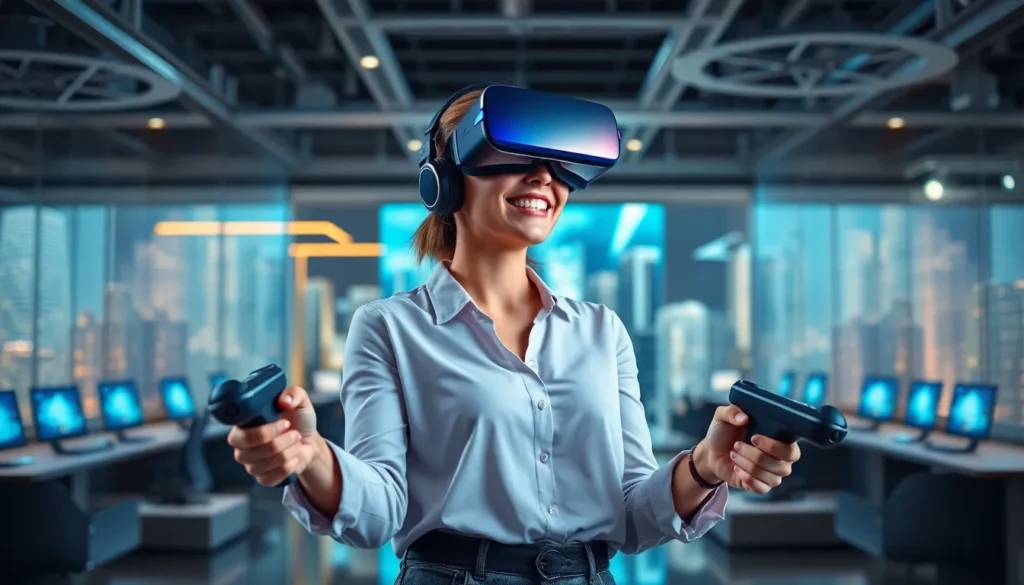
Imagine slipping on a headset and diving into a world where your office is on Mars and your coworkers are friendly robots. Welcome to the exciting realm of virtual reality jobs, where the line between work and play blurs into a thrilling adventure. As technology evolves, so do the opportunities, and VR is not just for gamers anymore.
Overview of Virtual Reality Jobs
Virtual reality jobs encompass a variety of roles that leverage immersive technology. These positions significantly impact industries like education, healthcare, and entertainment. Individuals pursuing careers in this field often specialize in game design, software development, or hardware engineering.
Developers create engaging experiences for users in virtual environments. Artists design digital assets, enhancing the visual aspect of VR experiences. Engineers focus on hardware components, ensuring seamless hardware-software integration.
The demand for VR professionals is escalating. The global virtual reality market is expected to exceed $57 billion by 2027. More companies are adopting VR strategies, improving employee training and customer engagement.
Educators utilize VR to enhance learning experiences. Medical professionals simulate surgeries using VR, preparing future doctors for real-life situations. Retailers create virtual stores, allowing customers to explore products from home.
Job opportunities vary across numerous industries. Some roles require technical skills, while others focus on creativity. Positions like UX/UI designers prioritize user experience to foster effective interactions.
Networking within the VR community proves essential for job seekers. Professional associations and online forums help individuals discover new opportunities. Participating in industry events offers insight into emerging trends and potential partners.
Educational institutions offer programs tailored to VR career paths. Students often gain hands-on experience, making them more competitive in the job market. Internships provide valuable exposure, connecting them with industry leaders and potential future employers.
Types of Virtual Reality Jobs

The variety of roles within the virtual reality landscape offers significant opportunities for professionals across several industries. Each job type focuses on distinct skills and areas.
Game Development
Game developers play a crucial role in creating immersive virtual experiences. They design engaging gameplay mechanics and develop rich narratives that captivate users. Programmers focus on coding the experiences, while artists create stunning graphics and environments. Collaboration among team members ensures a cohesive product. The demand for game developers remains high as VR technology evolves, with opportunities in various companies ranging from indie studios to major firms.
Simulation and Training
Simulation and training specialists create realistic VR environments for education and professional development. These professionals design scenarios that replicate real-world situations, allowing users to practice skills without risk. Sectors such as healthcare and aviation heavily rely on this technology for training purposes. By developing comprehensive training modules, specialists enhance learning outcomes and improve retention. Organizations increasingly adopt simulation technology, leading to a high demand for skilled professionals in this area.
Virtual Reality Design
Virtual reality designers focus on the user experience within virtual environments. They craft intuitive interfaces and ensure accessibility for diverse audiences. These designers blend creativity with technical skills to develop visually appealing and functional spaces. User feedback shapes their design decisions, enhancing overall satisfaction. As businesses recognize the value of well-designed VR experiences, the need for expertise in this field continues to grow.
Skills Required for Virtual Reality Jobs
Virtual reality jobs demand a combination of technical and soft skills. Understanding both areas enhances an individual’s potential for success in this growing field.
Technical Skills
Proficiency in programming languages such as C++ and Python proves essential for VR developers. Familiarity with VR platforms like Unity and Unreal Engine helps create engaging experiences. Knowledge of 3D modeling software such as Blender or Maya allows artists to design immersive environments. Skills in hardware integration are crucial for engineers who ensure seamless functionality between software and devices. Familiarity with VR-specific technologies, including motion tracking and haptic feedback systems, enhances user interaction. Staying updated with advancements in VR technology ensures competitiveness in the job market.
Soft Skills
Strong communication skills facilitate collaboration among team members, making project development smoother. Creativity fosters innovative solutions to design challenges, enriching user experiences. Problem-solving abilities are vital for addressing technical issues that arise during development. Adaptability helps professionals keep pace with rapid industry changes and emerging technologies. Critical thinking aids in making informed decisions throughout the design process. Emotional intelligence enhances team dynamics, promoting a positive work environment. All these soft skills significantly contribute to success in virtual reality roles.
Career Path and Opportunities
Virtual reality jobs present numerous career paths and opportunities across various industries. Specializations within the VR job market cater to different interests and skills, ensuring a wide range of options for job seekers. For instance, game developers focus on immersive experiences by refining gameplay mechanics and crafting engaging narratives. Simulation specialists design realistic training environments to enhance learning, particularly in fields like healthcare and aviation.
Creativity plays a crucial role in VR design positions. Designers prioritize user experience by creating intuitive interfaces and ensuring accessibility for all users. Technical roles demand proficiency in programming languages, including C++ and Python. Familiarity with VR platforms, such as Unity and Unreal Engine, proves essential for successful project execution. Knowledge of 3D modeling software, like Blender or Maya, enhances an individual’s competitiveness in the job market.
Shared experiences within the VR community foster networking and professional growth. Industry events and professional associations provide valuable insights and connections for aspiring professionals. Educational institutions also recognize the demand for VR specialists by offering tailored programs that combine theoretical learning with practical experience. These programs often include opportunities for hands-on projects and internships.
As the VR market expands, the demand for skilled professionals continues to increase. Global projections suggest that the VR market could exceed $57 billion by 2027. This growth offers significant opportunities in training, education, and customer engagement sectors. Individuals equipped with a combination of technical and soft skills, such as communication, creativity, and problem-solving, are well-positioned for successful careers in virtual reality. In summary, the landscape of VR jobs is ripe with potential, making it an appealing field for aspiring professionals.
The rise of virtual reality jobs signifies a transformative shift in how industries operate. With a growing demand for skilled professionals across various sectors, opportunities abound for those willing to embrace this innovative field. As companies increasingly integrate VR into their strategies, the potential for career advancement is vast.
For aspiring individuals, honing both technical and soft skills is crucial. Engaging with the VR community through networking and education can enhance their prospects. The future is bright for those ready to explore the immersive world of virtual reality, making it an exciting time to pursue a career in this dynamic landscape.


