
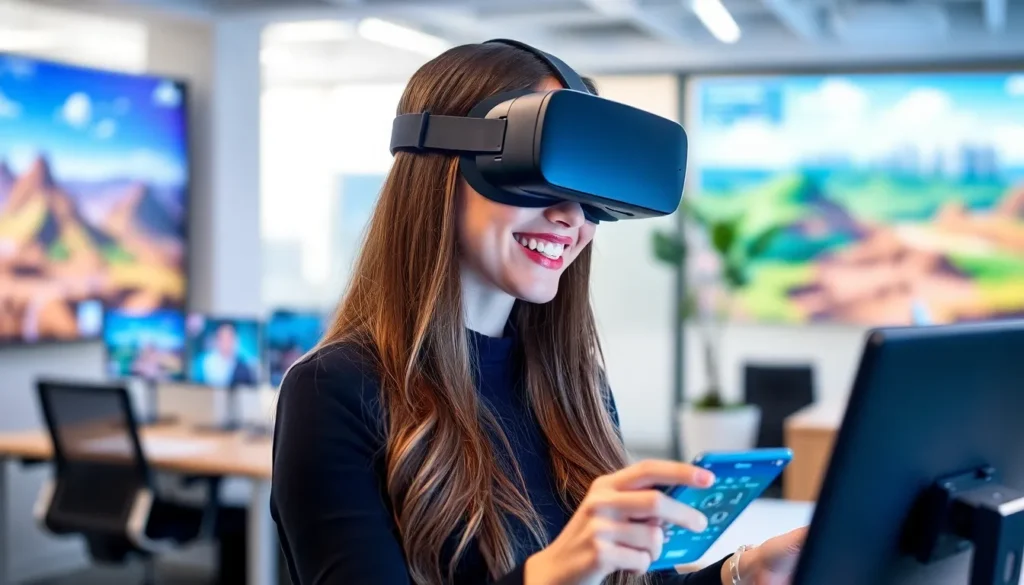
In a world where reality can sometimes feel a bit too mundane, virtual reality app development companies are here to save the day. Imagine diving into a digital ocean or battling dragons without ever leaving your couch. These innovative companies are crafting experiences that make even the most thrilling roller coasters seem like a gentle stroll in the park.
Understanding Virtual Reality
Virtual reality (VR) merges physical and digital realms to create immersive experiences. Users interact with simulated environments, enhancing various activities from gaming to training.
Definition and Concepts
Virtual reality refers to a technology that immerses users in a computer-generated environment. VR’s key components include hardware, such as headsets and motion sensors, alongside software that creates realistic worlds. Users can manipulate these worlds, making them active participants rather than passive observers. Examples of VR applications span gaming, education, and therapy, showcasing its versatility across sectors.
Importance in Today’s Market
Virtual reality plays a crucial role in evolving technology markets. Companies prioritize immersive experiences to engage consumers and differentiate their offerings. Market research reveals a projected global VR market size of $57.55 billion by 2027, reflecting its growing significance. This technology enhances marketing strategies, particularly in real estate and retail, by allowing potential customers to visualize products and spaces. Investing in VR continues to yield innovative applications, driving progress across industries.
Key Services Offered by Virtual Reality App Development Companies

Virtual reality app development companies provide a range of essential services that enhance user experiences. These services include custom app development and VR solution integration, vital for various industries.
Custom App Development
Custom app development caters to unique project needs. Developers create tailored virtual reality applications that align with specific user requirements and business goals. Engaging experiences are prioritized, whether for gaming, training, or education. Companies can integrate advanced technologies, such as AI, to enhance interactivity and realism. The focus remains on delivering high-quality, immersive applications that stand out in a competitive market.
VR Solution Integration
VR solution integration involves incorporating virtual reality into existing systems. This service enhances product offerings and enriches user engagement across platforms. Companies analyze current business processes and identify opportunities for VR enhancements. Integrating VR into marketing strategies allows brands to create captivating experiences for potential customers. Users benefit from enhanced visualization, leading to better purchasing decisions. Prioritizing such integration fuels innovation in diverse sectors, including retail, real estate, and education.
Choosing the Right Virtual Reality App Development Company
Selecting a virtual reality app development company requires careful consideration. Publishers should prioritize several key factors to find the best fit for their projects.
Factors to Consider
Identify the specific goals of the VR experience. Potential clients should analyze the desired features, targeted audience, and industry applications. Furthermore, assess the company’s portfolio for similar projects, spotlighting their design style and technical capabilities. Consider the scalability of the applications they create to ensure future growth. Additionally, evaluate the company’s development process, emphasizing transparency and communication throughout the project lifecycle.
Evaluating Experience and Expertise
Experience counts in virtual reality app development. Review the company’s time in the industry and the complexity of their projects. Look for expertise in programming languages relevant to VR, such as C# and C++. Assess the qualifications of their developers, including any specialties in areas like gaming or education. Seek client testimonials that reflect successful project outcomes and satisfaction. Trustworthy companies often share case studies that demonstrate their problem-solving abilities and innovative approaches.
The Development Process of Virtual Reality Apps
The development process of virtual reality apps involves several key stages that ensure a successful outcome. Each stage plays a crucial role in creating immersive experiences tailored to user needs.
Initial Consultation and Planning
Initial consultation sets the foundation for the entire project. Companies and clients discuss specific goals for the virtual reality experience. Identifying user needs and desired features occurs during this phase. Developers analyze the market and gather insights to inform decision-making. Effective communication between the client and the development team fosters a clear understanding of expectations. Planning involves outlining project milestones and defining timelines to keep everything on track.
Design and Prototype Development
Design and prototype development bring ideas to life. Professional designers create visual concepts that reflect the intended experience. Collaborating with clients allows designers to incorporate feedback and make necessary adjustments. Prototyping provides a tangible representation of concepts, enabling early testing of functionality. This stage focuses on user interface and user experience, ensuring an intuitive interaction with virtual environments. Iterations occur based on user input, refining the design to enhance immersion.
Testing and Quality Assurance
Testing and quality assurance play a vital role in delivering a flawless product. Rigorous testing identifies bugs and usability issues, ensuring optimal performance. Both functional and experiential testing occur to assess the application’s responsiveness. User feedback is integral during this phase, allowing for adjustments based on real-world interactions. Quality assurance ensures the final product meets industry standards and delivers a seamless experience. Launch readiness is confirmed through comprehensive evaluations before deployment.
Future Trends in Virtual Reality App Development
Innovations in virtual reality app development continuously shape user experiences. Future advancements hinge on both emerging technologies and market predictions.
Emerging Technologies
Artificial intelligence plays a significant role in enhancing VR applications. AI algorithms improve real-time interactions, offering more personalized experiences. Moreover, advancements in hardware, such as the development of lighter headsets, increase user comfort and accessibility. 5G connectivity facilitates smoother, high-quality streaming of VR content, enabling immersive experiences without latency issues. Additionally, the integration of haptic feedback devices enriches user interaction, creating a more tactile experience. Thus, these technologies collaboratively drive the future of virtual reality.
Market Predictions
The global virtual reality market is poised to reach approximately $57.55 billion by 2027. This rapid growth reflects increasing adoption across diverse sectors, including gaming, healthcare, and real estate. Companies are likely to emphasize immersive marketing strategies as consumer demand for engaging content rises. Trends indicate that businesses will invest in custom VR solutions to differentiate themselves from competitors. Enhanced user engagement through compelling virtual environments is expected to become a priority for brands. Consequently, the future of virtual reality app development aligns closely with these market shifts and evolving consumer expectations.
The landscape of virtual reality is rapidly evolving and companies specializing in VR app development are at the forefront of this transformation. They’re not just creating apps; they’re crafting experiences that captivate users and reshape how they interact with digital content. As technology advances and consumer demand grows, these companies will continue to innovate and push boundaries.
Investing in a reliable VR app development partner is crucial for businesses looking to leverage this exciting technology. By focusing on tailored solutions and immersive experiences, companies can enhance user engagement and drive growth across various sectors. The future of virtual reality holds immense potential and those who embrace it will undoubtedly stand out in a competitive market.


